Sound advice on protecting your dog’s hearing.
A puppy’s ear canals are closed until approximately 12 to 14 days of age; They rely on other senses, such as touch and scent, to navigate their environment. Good breeders will begin to habituate puppies to household sounds; those that miss out on this vital learning may be more sensitive to sounds throughout their lives. By day 20, a dog has developed its full hearing capacity.
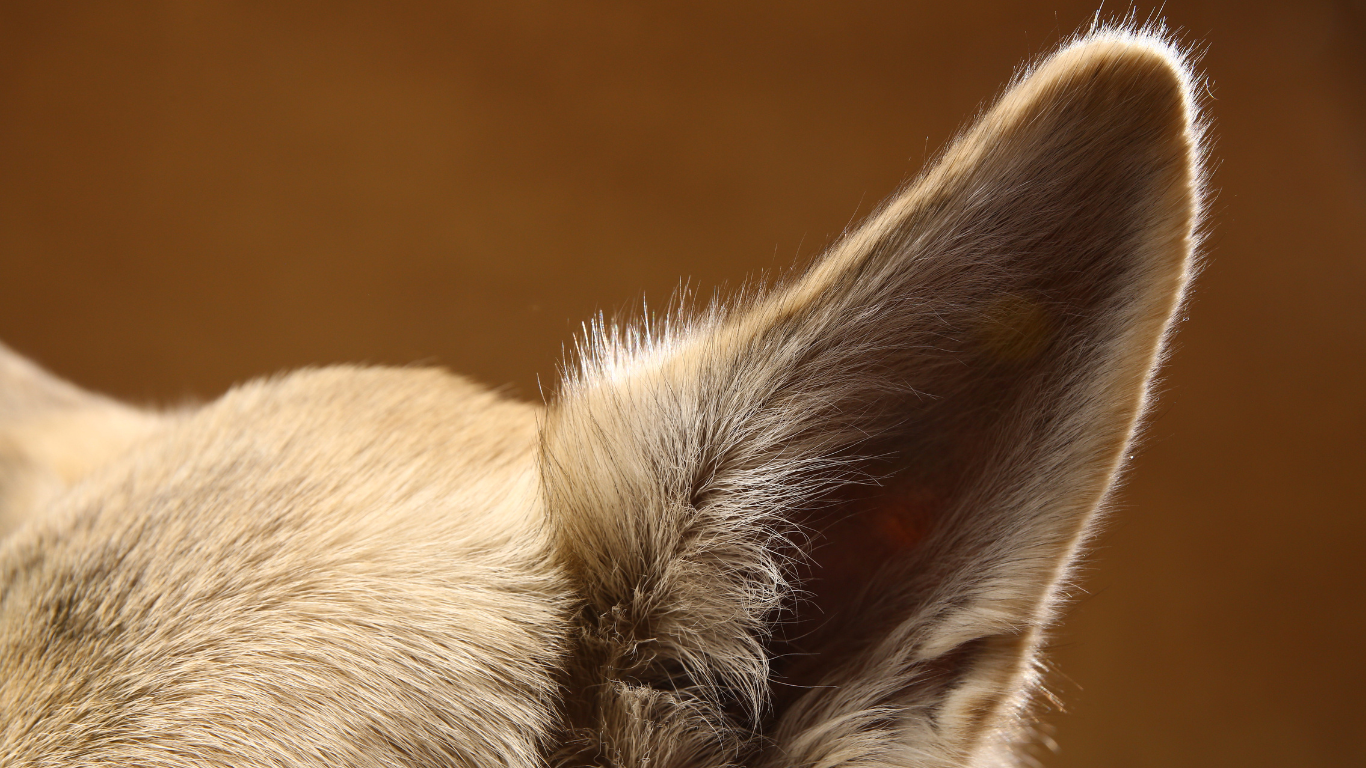
To understand how sound may impact a dog’s behaviour, it is useful to understand the anatomy and physiology of the dog’s ear. The external part of the ears is called the pinnae. A dog’s conformation may influence its hearing; for example, dogs such as the Podenco, a Spanish hunting dog, have erect ears, which allow for greater detection of sound and gathering vital information.
Although their ears support their fantastic sense of hearing, dogs with upward-facing, cylindrical-shaped ears may be more likely to develop sound sensitivities. Conversely, dogs with floppy ears, such as Beagles, rely more on their sense of smell, and their folded ears may act as barriers to block sounds. Additionally, the risk of ear inflammation and infection is increased, which can result in narrowing of the ear canal and, therefore, hearing loss. Once sound waves enter the pinna, they are funnelled into the ear canals to reach the eardrum.
The eardrum vibrates, and these vibrations are amplified by tiny bones inside the middle ear called ossicles. The vibrations travel to the cochlea, a fluidfilled cavity containing tiny hairs that detect changes in pressure and convert the vibrations into electrical signals, which are sent to the brain. These parts work together to provide the dog with the sense of hearing.
It has been suggested that the dog has a hearing range between 40 and 60,000 Hz, which is far greater than that of humans, who are capable of detecting sounds between 20 and 20,000 Hz. A dog can, therefore, hear pitches of sound that are three times higher in frequency. It is also thought that dogs can hear at distances four times further than humans, which may explain why they sometimes react suddenly to something of which we are not aware.
A large part of my caseload involves working with dogs which have developed sensitivities to sounds such as fireworks, thunder or household machinery. High-pitched sounds that we are unable to hear may cause pain to the dog’s ear and can trigger the fight or flight response. Additionally, bangs or pops can startle dogs, which can result in tension of the muscles and joints; rigidity can exacerbate discomfort, particularly in dogs with underlying pain conditions. This highlights the importance of a veterinary assessment for dogs who have developed sudden sound sensitivities, since pain is a huge concern for quality of life.
Dogs can also create associations in response to sounds. If a motorbike backfires while a dog is crossing the road, they may become fearful and refuse to cross that road in future. Dogs with sound sensitivities can be supported, and individualised behavioural modification plans can be designed to include desensitisation and counter-conditioning training, although this type of training requires time and patience.
As well as sensitivities to sounds, hearing loss can result in behavioural change. As a dog ages, the tiny hairs inside the cochlea become damaged, structural changes to the eardrums or ossicles and degeneration of nerves may occur and can result in hearing loss. Dogs with hearing loss may not respond to previously well-known cues, they may sleep more, become more anxious, or may startle more easily. Sound sensitivities rarely resolve without professional support; dogs may also begin to generalise one noise to several other similar sounds.
Prevention is better than cure when it comes to sound sensitivities, and begins with the breeder, it is therefore, vital to pick one who understands and undertakes a habituation programme with your puppy. For those dogs which develop sensitivities to sound later in life, always seek the support of your veterinarian.